The Illusion of Intelligence: Why Most AI Tools Are Just Well-Designed UX
In the ever-accelerating world of artificial intelligence, a growing number of tools and platforms claim to be powered by “cutting-edge AI.” From AI writing assistants to customer service bots and marketing optimizers, the label “AI-powered” is now a selling point in itself. But beneath this surge of excitement lies a quietly uncomfortable truth: most of today’s AI tools are not as intelligent as we think—they’re just really good at pretending.
This isn’t a knock on AI progress. It’s a reflection of how product design, interface psychology, and user expectations converge to create the illusion of intelligence.
The Magic Trick of Interface Design
A sleek interface, fast response time, and confidence in language are often all it takes to convince a user that something “intelligent” is happening. But what’s happening under the hood?
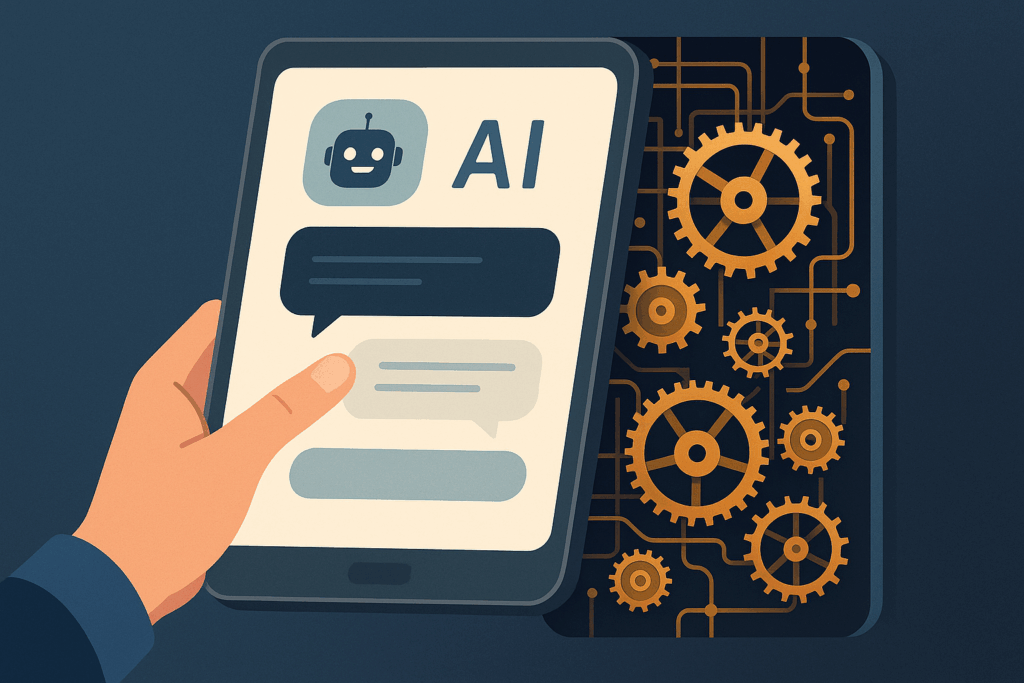
Take most AI customer support chatbots. While advertised as “AI-driven,” many rely on decision trees or pre-trained large language models (LLMs) that are heavily scripted and prompt-engineered to return pre-approved answers. The chatbot feels fast, responsive, and polite—but it doesn’t truly understand anything. It just looks intelligent, because the interface is doing a great job hiding the duct tape behind it.
This is the essence of what’s sometimes called UX-driven intelligence—design that creates a smooth and natural interaction flow, masking the shallow depth of actual reasoning.
Prompt Engineering vs. Real Reasoning
A significant portion of so-called “AI breakthroughs” today are not based on advances in core intelligence but on clever prompt engineering. Teams are building highly specific templates, chaining instructions, or fine-tuning models on narrow datasets to coax the best possible answer out of general-purpose language models.
Yes, the results can feel magical—but we must distinguish between language fluency and cognitive depth.
When an AI summarizes an article, recommends a product, or writes a blog post, it’s not engaging in thought. It’s navigating probabilities. It’s not solving problems—it’s predicting the next most likely word or token based on statistical training.
The IKEA Effect of AI Tools
There’s also a psychological element to this illusion: users tend to overvalue AI tools they’ve “configured” themselves, just as people feel more attached to IKEA furniture they’ve assembled.
If an AI dashboard lets you upload your data, set a few parameters, and then generates an impressive-looking report, it’s easy to assume the system has some deep understanding of your domain. In truth, the AI may just be plugging your numbers into a pre-defined template behind the scenes.
The moment you encounter an edge case or something slightly outside the model’s training distribution, the illusion collapses.
Why This Matters
The danger isn’t that AI tools are weak—it’s that we overestimate what they can do, and design choices often reinforce that misperception. This leads to several real-world risks:
- Overreliance on AI: Businesses may trust AI-generated decisions (e.g. financial forecasts, medical suggestions) without appropriate human oversight.
- Ethical shortcuts: Teams might assume “AI is objective,” while behind the curtain, biased datasets or rigid logic paths drive outcomes.
- Unrealistic expectations: Users get disappointed when AI doesn’t generalize well, leading to mistrust in truly innovative systems.
The Path Forward: Transparent AI Design
If we want users to trust AI responsibly, we must design for clarity, not mystique. This includes:
- Making it visible when a model is guessing or lacks context
- Explaining confidence levels or decision paths in plain language
- Offering easy override mechanisms for human intervention
- Disclosing when responses are generated from templates or heuristics rather than adaptive intelligence
In other words, good UX shouldn’t mask AI’s limits—it should surface them.
Conclusion: UX is the New Turing Test
In 1950, Alan Turing asked if a machine could imitate human behavior well enough to fool a person. Today, many AI tools pass this “Turing Test” not because they’re intelligent—but because their design teams are.
What we’re witnessing in 2025 is not just the rise of artificial intelligence, but the rise of artificial coherence—systems that appear smart because they’re designed to feel smooth, confident, and human-like.
It’s time we stop mistaking interface polish for true intelligence and start holding AI tools to more honest standards—ones rooted in transparency, integrity, and thoughtful design.