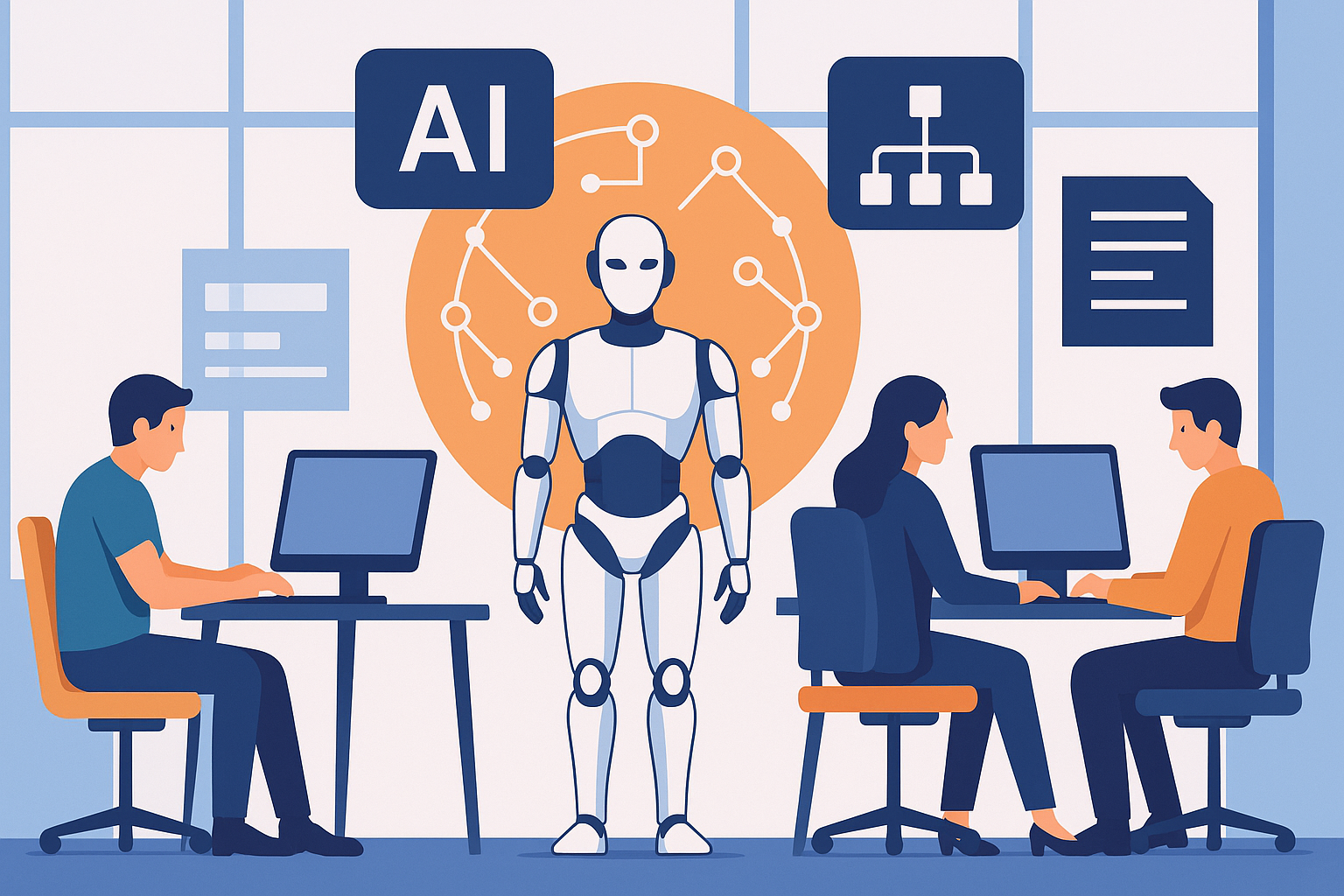
Harnessing AI for Smarter Business Strategies
In today’s business landscape, decisions are no longer solely based on intuition and historical data. Companies that want to stay competitive are increasingly turning to AI-driven insights to refine their strategies, predict market trends, and optimize operations. Artificial intelligence is no longer just a support tool—it is becoming a core component of strategic decision-making, influencing everything from supply chain management to personalized marketing.
The shift toward AI-driven business intelligence has been accelerated by advancements in machine learning, natural language processing, and automation. These tools are allowing businesses to analyze real-time data, automate routine processes, and make predictions with greater accuracy than ever before. Companies that effectively leverage AI are not only improving efficiency but also gaining deeper insights into customer behavior, market shifts, and operational risks.
This article explores the transformative role of AI in business strategy, data-driven decision-making, and operational optimization, along with the challenges companies face when integrating AI into their workflows.
AI-Driven Market Intelligence: Seeing the Future Before It Happens
One of the most powerful applications of AI in business is its ability to analyze massive datasets and identify patterns that would be impossible for humans to detect. This has given rise to AI-powered market intelligence platforms that help businesses stay ahead of competition, predict demand fluctuations, and fine-tune their strategies in real time.
1. Predictive Analytics for Competitive Advantage
- AI models analyze market trends, competitor activity, and consumer sentiment to provide businesses with accurate forecasts.
- Retailers use AI-driven demand forecasting to adjust inventory levels dynamically, preventing stockouts and overstocking.
- AI-powered pricing engines assess customer behavior, competitor pricing, and economic trends to recommend optimal pricing strategies.
2. Sentiment Analysis and Consumer Insights
- AI-powered tools scan social media, news articles, and online reviews to gauge public sentiment about brands, products, and competitors.
- Businesses use AI-generated insights to adjust marketing campaigns in real time, responding to customer concerns before they escalate.
- AI-enhanced CRM systems analyze customer interactions and feedback, allowing businesses to personalize offers and improve engagement.
The ability to predict and adapt to changes in consumer behavior and market conditions is a critical advantage that AI provides, helping companies mitigate risks and seize opportunities faster than ever before.
Optimizing Business Operations with AI
Beyond strategic insights, AI is also transforming day-to-day business operations, driving efficiency across multiple domains.
1. AI in Supply Chain and Logistics
- AI-powered supply chain management tools predict shipping delays, demand surges, and supply shortages, allowing businesses to react proactively.
- Autonomous warehouses and AI-driven robotics are improving inventory management and order fulfillment, reducing labor costs and errors.
- AI models optimize transportation routes and fleet management, reducing fuel consumption and improving delivery speeds.
2. AI-Powered Decision Support Systems
- Businesses are integrating AI-driven dashboards that provide real-time analytics on financial performance, employee productivity, and operational efficiency.
- AI-powered risk management platforms help businesses identify potential financial, legal, and cybersecurity threats before they become critical issues.
- AI in project management tools can analyze workloads and optimize resource allocation, ensuring teams are working at maximum efficiency.
By streamlining operations and reducing inefficiencies, AI is allowing businesses to scale more effectively while maintaining cost efficiency and high productivity.
AI and Hyper-Personalization in Business
AI is playing a crucial role in creating hyper-personalized experiences for customers, employees, and business partners. By leveraging AI-driven insights, companies can offer tailored experiences that increase engagement, drive sales, and improve customer satisfaction.
1. AI in Personalized Marketing and Customer Experience
- AI-powered recommendation engines analyze user preferences and browsing behavior, offering tailored product suggestions that boost conversion rates.
- AI-driven chatbots and virtual assistants provide instant, context-aware responses, enhancing customer service efficiency.
- AI-generated dynamic pricing strategies adjust product prices in real time, ensuring optimal revenue generation based on demand fluctuations.
2. AI in Employee Experience and Workforce Management
- AI-driven HR platforms analyze employee performance and engagement, helping companies develop personalized career growth plans.
- AI-powered recruitment tools screen resumes, predict candidate success, and improve hiring efficiency.
- AI in workplace collaboration tools enhances productivity by automating meeting scheduling, summarizing discussions, and organizing tasks intelligently.
Hyper-personalization powered by AI is increasing customer loyalty, enhancing workplace productivity, and making business interactions more efficient and effective.
Challenges of AI Adoption in Business
Despite its advantages, AI adoption in business comes with several challenges that companies must navigate carefully.
1. Data Privacy and Security Risks
- AI relies on vast amounts of data, raising concerns about how businesses collect, store, and protect sensitive information.
- Companies must comply with data privacy regulations such as GDPR and CCPA while maintaining AI-driven personalization.
2. Ethical Considerations and Bias in AI
- AI models can amplify biases present in their training data, leading to unintended discrimination in hiring, lending, or customer profiling.
- Businesses must implement ethical AI guidelines to ensure fairness and transparency in decision-making.
3. Integration with Existing Business Systems
- Many businesses struggle to integrate AI into legacy systems, leading to inefficiencies and fragmented workflows.
- Successful AI adoption requires strong leadership, employee training, and the right infrastructure to support AI-driven processes.
By addressing these challenges, businesses can maximize the benefits of AI while ensuring responsible and ethical implementation.
The Future of AI in Business Strategy
Looking ahead, the integration of AI into business strategies is set to become even more advanced. Some key developments to watch include:
- AI-driven autonomous decision-making, where AI systems not only provide recommendations but make certain business decisions autonomously.
- Greater adoption of AI-powered business simulations, allowing companies to test different strategies in virtual environments before implementation.
- Advancements in AI explainability, ensuring that AI-generated decisions are transparent, justifiable, and easy to interpret.
- AI-powered sustainability initiatives, helping businesses reduce carbon footprints and optimize resource consumption.
Businesses that invest in AI-driven transformation today will be at the forefront of innovation, gaining a competitive edge in an increasingly AI-powered economy.
Final Thoughts: AI as a Business Imperative
AI is no longer an optional technology—it has become a strategic necessity for businesses looking to stay ahead of the competition, optimize operations, and personalize customer experiences. Companies that embrace AI-driven decision-making, automation, and hyper-personalization will have the agility to adapt to rapidly changing market conditions.
However, successful AI adoption requires more than just technology—it demands a cultural shift, strong leadership, and a commitment to ethical AI practices. Businesses that balance AI-driven efficiency with human oversight, ethical considerations, and data security will set themselves apart as leaders in the next era of business innovation.