
The AI Curve: Staying Human in a Rapidly Automating World
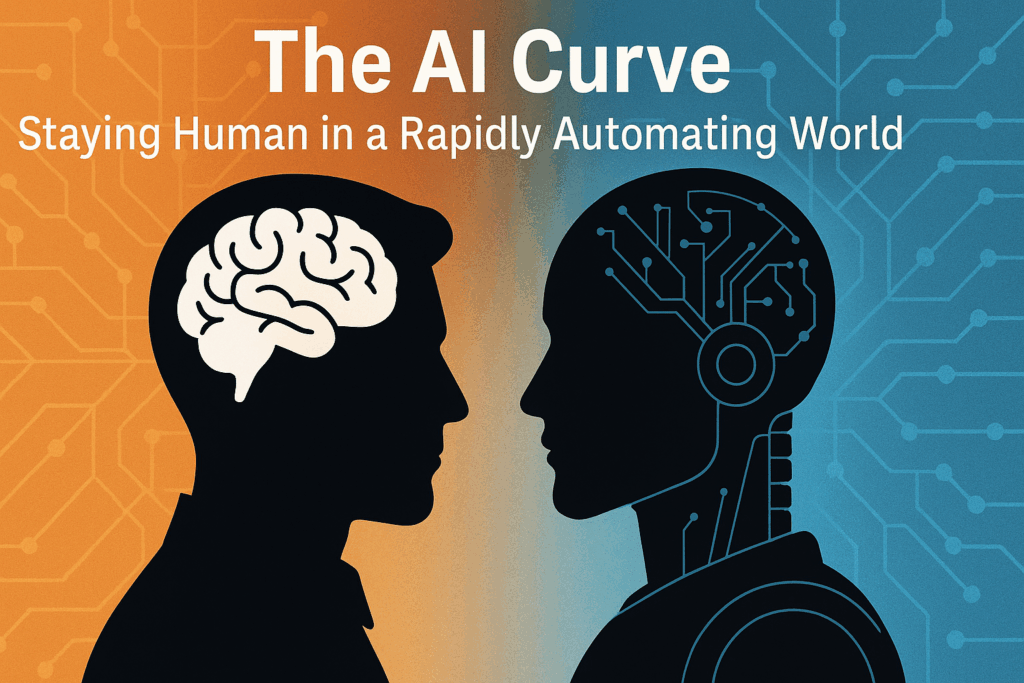
Automation is no longer a distant concept—it’s happening around us every single day. From the way we interact with services to how decisions are made in businesses, artificial intelligence (AI) is quietly but steadily reshaping the modern world. While the opportunities are vast, the question that matters most is: How do we stay human in a world increasingly driven by machines?
Automation: More Than Just Efficiency
Most conversations about AI focus on efficiency, speed, and scalability. Organizations proudly automate repetitive tasks, optimize supply chains, and use algorithms to enhance customer experiences. But as AI becomes more integrated into our workflows, we risk losing some of the very traits that make us valuable: empathy, creativity, and critical thinking.
AI can predict outcomes, suggest actions, and even simulate conversation—but it cannot replicate human emotions, ethical judgment, or cultural nuance. These uniquely human skills are becoming even more critical as automation accelerates.
Navigating the AI Curve
The AI Curve represents the evolving relationship between technology and human capabilities. As automation takes over routine tasks, the value of distinctly human skills rises. Adaptability, leadership, emotional intelligence, and ethical reasoning are no longer “soft skills”—they are survival skills.
Navigating the AI curve means intentionally developing these human strengths. It means creating workplaces where people and machines complement each other, rather than compete. It’s about designing processes where AI handles efficiency, but humans drive vision, culture, and innovation.
How Leaders Can Keep Humanity at the Core
Organizations that thrive in an AI-powered world will not be the ones that simply install the latest technologies. They will be the ones that prioritize human-centered leadership. Here’s how:
- Invest in Emotional Intelligence: Teach teams to lead with empathy, not just analytics.
- Promote Ethical Literacy: Encourage ethical reflection in AI adoption and use.
- Foster Creativity: Build environments where human imagination is seen as a strategic asset.
- Encourage Lifelong Learning: Help employees continually adapt and reskill alongside technological change.
The Hidden Risks of Over-Automation
While AI promises efficiency and scalability, the blind pursuit of automation can also introduce unseen risks. When decision-making becomes overly reliant on algorithms, organizations risk losing transparency, fairness, and accountability. Biases embedded within AI models can lead to unintended discrimination. Automated systems can make critical decisions faster—but not always more wisely.
Moreover, as AI automates complex tasks, there is a growing risk of de-skilling. When humans no longer engage deeply with decision-making processes, their ability to question, innovate, and intervene weakens. Over time, teams may become excellent operators of automated systems but lose the deeper expertise needed to adapt when conditions change.
True leadership in an AI-driven world demands more than simply knowing how to use technology—it requires understanding when not to automate, and how to preserve critical thinking alongside computational speed.
Building AI-Conscious Organizations
Organizations that embrace AI successfully are those that build AI-conscious cultures—where technology serves human values, not the other way around. Here are some foundational pillars to achieve this:
- Ethical Frameworks: Develop clear guidelines for responsible AI use, focusing on transparency, bias mitigation, and human oversight.
- Human-in-the-Loop Systems: Ensure critical systems always involve human review, especially in high-stakes environments like finance, healthcare, and public safety.
- Emotional Safety Nets: Create channels where employees can express concerns about AI systems and how they impact work, without fear of reprisal.
- AI Literacy Programs: Educate staff at all levels about how AI works, its benefits, and its limitations—so that technology becomes an enabler, not a mystery.
These steps don’t slow innovation down. They create a stronger foundation for sustainable, responsible innovation that supports both business goals and human dignity.
Why Staying Human is the Real Competitive Edge
As more organizations rush to automate, ironically, the most valuable differentiator will be distinctly human traits.
Companies that foster adaptability, empathy, creativity, resilience, and ethical courage will navigate the AI revolution with greater success than those that rely purely on technical upgrades.
Clients, partners, and employees alike will gravitate toward organizations that show they value people—not just processes.
And individuals who can merge technological fluency with human-centered leadership will become the indispensable leaders of the next decade.
Conclusion: Navigating the AI Curve with Courage and Compassion
The future shaped by AI is already here. But it’s not a future we must fear—if we design it wisely.
The AI Curve is not a simple path to automation; it is a challenge to reimagine the role of humanity within a machine-driven world.
It is a call to amplify what makes us human: our ability to connect, to create, to care, and to choose wisely.
By embracing technology thoughtfully and leading with empathy, we can ensure that innovation doesn’t come at the cost of our humanity—but rather becomes a tool to elevate it.
The curve is here.
How we choose to climb it will define our legacy.


2 Responses
ketorolac migraine relief
ketorolac migraine relief
toradol short term duration rules
toradol short term duration rules