
From Plugins to Agents: The New Generation of AI-Powered Productivity Tools
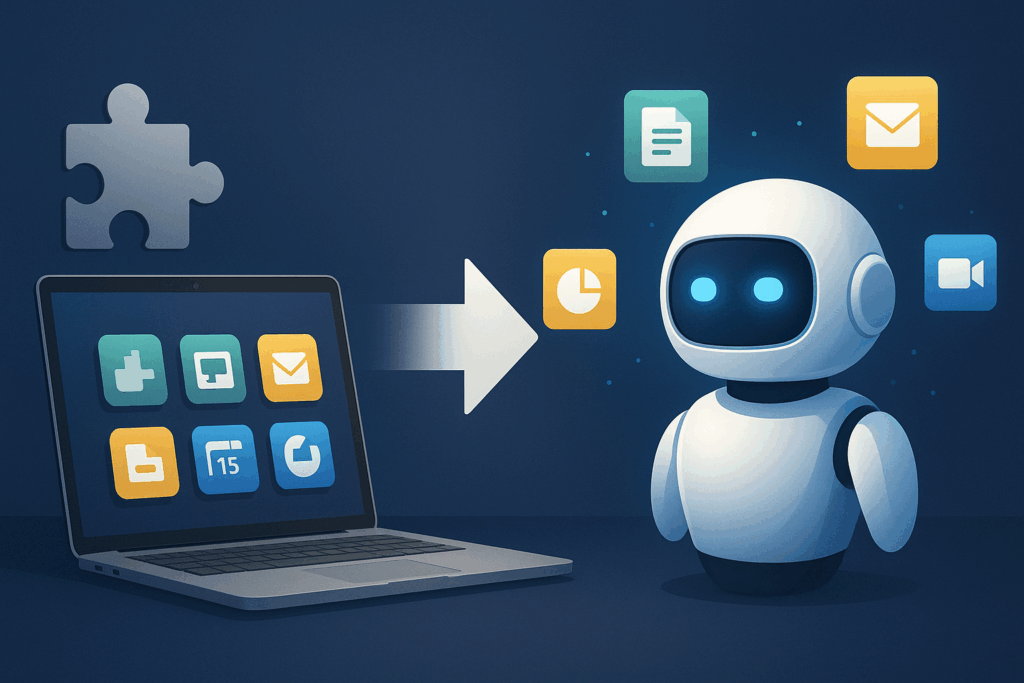
In the last two years, the AI landscape has evolved far beyond autocomplete, smart replies, or grammar correction. Today, we are witnessing a paradigm shift in how artificial intelligence integrates into our daily workflows—not just as assistive features, but as autonomous collaborators. The transition from traditional plugins to AI agents represents one of the most profound shifts in digital productivity since the rise of cloud computing.
So what exactly is changing, and why does it matter?
Plugins Were the First Step: Task-Centric Efficiency
Plugins—like the ones introduced in ChatGPT, Notion, Figma, or Zapier—enabled AI models to “extend” their capabilities. They acted like smart middleware, allowing users to interact with services such as web browsers, APIs, or databases through natural language.
These tools made workflows smoother and reduced cognitive friction. Instead of writing a SQL query, users could ask:
“Show me total sales from last quarter for North America.”
and the plugin would handle the rest.
However, these plugins were reactive. They executed a single command and stopped. They didn’t have memory, initiative, or goals. They were useful—yes—but not independent.
The Rise of AI Agents: Workflow-Centric Autonomy
In contrast, AI agents are designed to operate semi-autonomously. They don’t just respond to prompts—they pursue objectives.
Think of it like this:
A plugin is a sharp tool.
An agent is a capable intern who understands what you want and works toward it, often proactively.
Examples include:
- Auto-GPT / AgentGPT: Multi-step reasoning tools that can break down and execute tasks like “launch a podcast” or “research market trends.”
- Microsoft Copilot Agents: Embedded across the Office suite, these tools understand organizational context and work across documents, emails, and chats.
- CrewAI / LangGraph / Superagent: Frameworks that coordinate multiple AI agents to collaborate, delegate subtasks, and report back results.
- Zapier Central Agent (beta): A new type of workflow builder where an agent decides when and how to trigger automations.
Why This Shift Is So Important
- From commands to conversations
Agents move us beyond prompt engineering. You no longer need to perfectly phrase a request. You just say: “Help me plan a launch campaign,”
and the agent can ask clarifying questions, analyze previous data, and generate a full proposal. - From one-shot to ongoing tasks
Agents can loop—run tasks over time, gather feedback, adjust strategies. Some even self-correct. This mimics real-world collaboration, not just static automation. - From tools to teammates
In the plugin world, you still had to manage the tools. In the agent world, you begin to delegate. The mindset shifts from “doing with AI” to “leading AI”.
Challenges Still to Overcome
Despite the excitement, we are far from frictionless AI workflows. Key issues include:
- Context limitations: Most agents still struggle with retaining long-term context across sessions or platforms.
- Reliability: Agents sometimes hallucinate or execute actions based on flawed assumptions.
- Security and trust: Delegating decisions to AI means needing strict guardrails—especially in legal, financial, or healthcare domains.
- User understanding: Users may not know how to “manage” an agent, leading to over-trust or under-use.
For now, many businesses are experimenting with hybrid agents—AI that suggests, drafts, or advises, but always leaves the final decision to a human.
What’s Next: Goal-Oriented Workflows
The next wave of productivity tools will be goal-driven. Instead of juggling multiple dashboards and tools, you’ll simply state your intention:
“Help me increase newsletter engagement.”
“Research and summarize competitors’ pricing strategies.”
“Draft and A/B test a new landing page.”
And the system—backed by multiple agents—will plan, execute, revise, and monitor the results.
This is more than productivity. It’s a new interface to work itself.
Conclusion: We’re Not Automating Tasks, We’re Automating Initiative
The shift from plugins to agents is subtle but seismic. We’re moving from interfaces that wait for instructions to systems that pursue outcomes. While plugins unlocked individual efficiencies, agents promise holistic transformation—blurring the lines between user and system, tool and teammate.
As these technologies mature, businesses and professionals must not only adopt them—but learn how to collaborate with them.
In the coming years, the most valuable skill may not be how well you use AI, but how well you guide it.



1 Response
[…] calls stops being one-to-one. We looked at this architectural shift in more detail when we examined the move from plugins to genuinely agentic tools, and the cost consequence is the part that received least attention at the […]